Table of Contents
- What Makes the Best Massage for Weekend Warriors
- Sports Massage Benefits for Athletes: How It Accelerates Recovery
- Deep Tissue Massage for Muscle Recovery and Tension Relief
- Orthopedic Massage for Chronic Pain and Movement Dysfunction
- Injury Prevention for Marathon Runners and Endurance Athletes
- Swedish Massage and Myofascial Release for Range of Motion
- Self-Massage Tools and Techniques: Foam Rolling and Percussion Therapy
- Post-Massage Recovery: Nutrition, Hydration, and Rest
- Frequently Asked Questions
Last Updated: September 3, 2026
What Makes the Best Massage for Weekend Warriors
If you’re training hard on weekends while working a desk job during the week, your body is caught between two worlds. You push through Saturday morning runs or Sunday soccer matches, then spend Monday through Friday hunched over a computer. The result: chronic muscle tension, delayed recovery, and the constant threat of injury that could sideline your training for weeks.
The best massage for weekend warriors isn’t about relaxation, it’s about performance. It’s therapeutic work designed to address the specific demands of someone who compresses intense athletic activity into a compressed schedule, then expects the body to recover while sitting still for 40 hours. At Frank A. Casucci III LMT, we’ve spent over two decades working with exactly this population: runners training for marathons, recreational soccer players, cyclists, and fitness enthusiasts who treat weekends like their second job.
What separates effective sports massage from generic spa work is specificity. The right approach targets the exact tissues that are breaking down under your training load, flushes metabolic waste that accumulates during intense effort, and restores range of motion before compensation patterns lock in. Below, we’ll walk through seven proven massage types that deliver measurable results for weekend warriors, and explain which one matches your particular demands.
Sports Massage Benefits for Athletes: How It Accelerates Recovery
Sports massage is specifically designed to address the physiological demands of athletic training. Unlike relaxation massage, it uses targeted pressure, active stretching, and movement-based techniques to influence how your muscles recover after hard efforts.
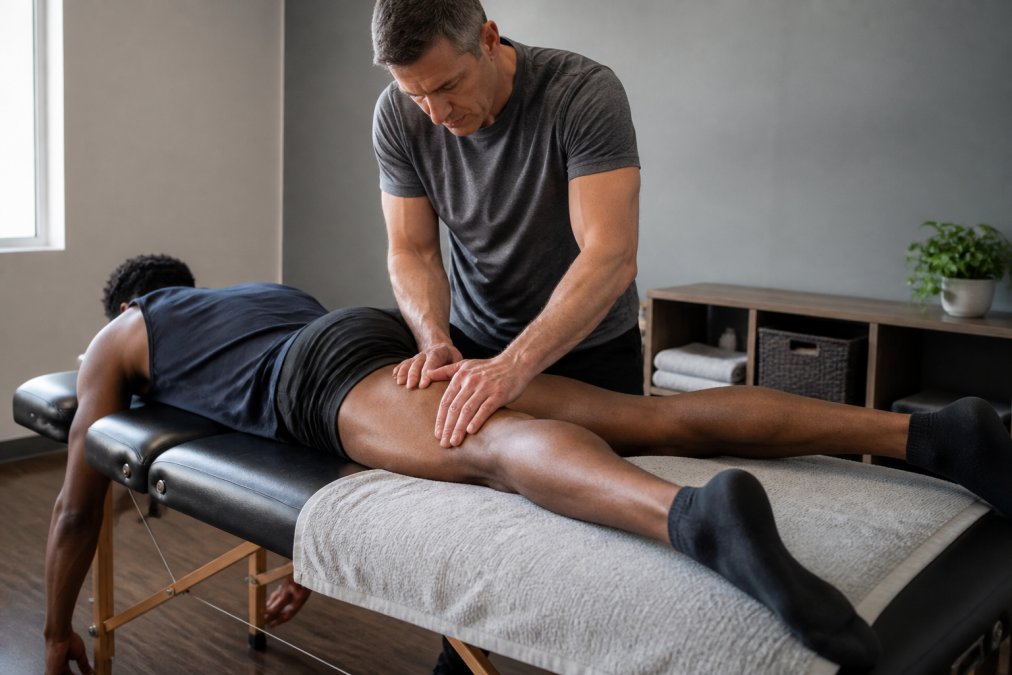
The mechanism is straightforward: intense training creates microscopic damage in muscle fibers and connective tissue. This triggers inflammation, necessary for adaptation, but also the source of soreness and stiffness. Sports massage accelerates the removal of metabolic waste products that accumulate in muscle tissue, improves circulation to speed nutrient delivery, and reduces the protective muscle tension that develops after hard workouts.
For weekend warriors specifically, sports massage serves a dual purpose. First, it addresses the acute soreness from your weekend training session. Second, it identifies and corrects the postural imbalances that develop during your weekday sedentary routine. A runner sitting in a chair all week develops hip flexor tightness that changes their running mechanics. A recreational athlete who lifts heavy on Sunday carries forward the muscle tension that compensation created. Sports massage catches these patterns before they become chronic pain or injury.
The timing matters. Most athletes see the best results from sports massage within 24-48 hours after intense training, when inflammation is peaked but acute soreness is setting in (peer-reviewed research).
Deep Tissue Massage for Muscle Recovery and Tension Relief
Deep tissue massage uses sustained pressure and slower strokes to reach the deeper layers of muscle and connective tissue where chronic tension lives. For weekend warriors, this is often the most immediately satisfying type of massage, you feel the work happening, and the relief is obvious.
The technique targets the muscle belly and the fascia that wraps around muscle groups. When you train hard, muscle fibers develop micro-tears and inflammation (peer-reviewed research). As inflammation resolves, scar tissue can form, and scar tissue is inelastic. It restricts range of motion and creates the stiff, locked-up feeling that persists for days after hard training. Deep tissue massage breaks down adhesions in this scar tissue and restores the muscle’s ability to lengthen and contract fully.
What makes deep tissue different from lighter massage is pressure and duration. A therapist applies sustained force perpendicular to the muscle fiber, often working across the grain rather than along it. This is uncomfortable during the session, many clients describe it as “good pain”, but the payoff is reduced soreness in the 24 hours after and noticeably improved flexibility within a few days.
For marathon runners and endurance athletes, deep tissue massage on the legs, hips, and lower back addresses the specific tissues that accumulate the most fatigue. For overhead athletes or weekend warriors with upper body training, the shoulders, chest, and upper back respond particularly well. The technique is less effective on acute injuries or areas with active inflammation, so timing your session after the acute soreness phase is important.
Orthopedic Massage for Chronic Pain and Movement Dysfunction
Orthopedic massage is assessment-driven work. A trained orthopedic massage therapist evaluates your movement patterns, identifies where dysfunction is occurring, and uses specific techniques to restore proper mechanics.
This is where Frank A. Casucci III LMT’s certification in Orthopedic Massage becomes relevant. Rather than treating the area where you feel pain, orthopedic massage traces dysfunction upstream and downstream. A weekend warrior with chronic lower back pain often doesn’t have a back problem, they have a hip problem, or an ankle problem, or a postural pattern that’s creating compensation. The back pain is the symptom. The dysfunction is elsewhere.
Orthopedic massage combines soft tissue work with movement assessment. A therapist might identify that your right hip is tight, which is forcing your lower back to rotate excessively during running. They’ll release the hip, then coach you through movement patterns to reinforce the new mechanics. This is why orthopedic massage often requires fewer sessions than other types to produce lasting change, you’re fixing the root cause, not treating the symptom.
For someone who’s been dealing with chronic pain for months or years despite physical therapy or chiropractic care, orthopedic massage offers a different lens. It’s particularly effective for patterns that other practitioners missed: shoulder dysfunction from desk posture affecting running form, ankle restriction limiting hip extension, rib cage immobility affecting breathing during training.
Injury Prevention for Marathon Runners and Endurance Athletes
Marathon training creates predictable injury patterns. The repetitive loading of running, combined with the cumulative fatigue of long training blocks, creates vulnerability in specific tissues: the plantar fascia, the IT band, the knee joint, and the hip complex.
Injury prevention for marathon runners isn’t about waiting until something hurts. It’s about identifying the vulnerabilities in your movement pattern before they become pain. A runner with restricted ankle dorsiflexion (the ability to pull your toes toward your shin) will compensate with excessive knee motion, which eventually creates knee pain. But the ankle restriction is the real problem.
Regular massage during a marathon training cycle addresses this proactively. Monthly or bi-weekly sessions allow a therapist to track how your tissues are responding to training load. Early signs of overuse, muscle tightness that isn’t resolving, fascial restrictions developing, compensation patterns emerging, get caught and corrected before they become injury. This is particularly valuable during the peak training phase of marathon prep, when the volume is highest and the risk of injury is greatest.
For endurance athletes, the mental component matters too. Knowing you have a therapist monitoring your tissues and catching problems early reduces the anxiety about injury that often accompanies high-mileage training. This translates to better training quality and fewer missed workouts due to fear.
Swedish Massage and Myofascial Release for Range of Motion
Swedish massage uses longer strokes, kneading, and circular movements to work with the muscle and the fascia that surrounds it. It’s lighter and more rhythmic than deep tissue work, making it a good choice when you need recovery without the intensity.
Myofascial release, work specifically targeting the fascia layer, has become increasingly recognized as critical for athletic performance. Fascia is connective tissue that wraps around every muscle, bone, and organ. When fascia becomes restricted or dehydrated, it limits range of motion and can create pain in areas far from where the restriction actually is.
Swedish massage combined with myofascial release techniques restores the glide and slide between tissue layers. A weekend warrior with tight shoulders might have fascia restriction in the pectoralis minor that’s limiting shoulder external rotation. Releasing this restriction restores range of motion that you didn’t even know you’d lost, which often translates to improved performance and reduced shoulder strain during training.
The rhythm of Swedish massage also activates the parasympathetic nervous system, which promotes recovery. After intense training, your nervous system is in a heightened state. Swedish massage helps shift you back toward rest-and-recover mode, which is when actual tissue adaptation happens. For this reason, Swedish massage is particularly effective in the days immediately following hard training, while deep tissue work is better suited for 3-5 days post-effort when acute soreness is established.
Self-Massage Tools and Techniques: Foam Rolling and Percussion Therapy
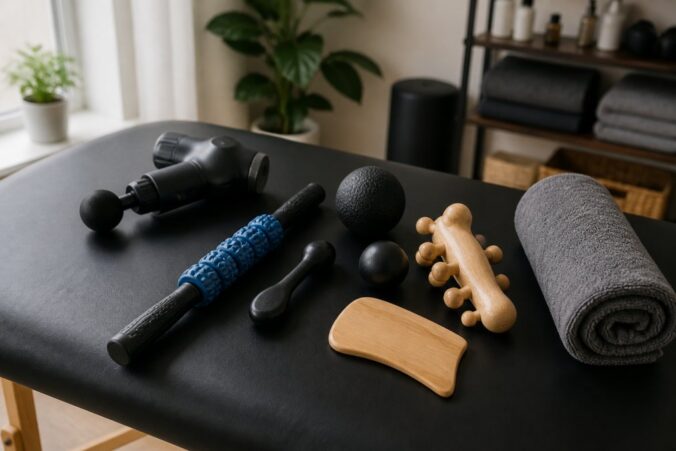
Between professional sessions, self-massage tools extend your recovery work. Foam rolling and percussion therapy (massage guns) aren’t replacements for professional massage, but they address the same tissues and can accelerate recovery when used strategically.
Foam rolling uses sustained pressure and slow movement to release muscle tension and fascia restriction. For weekend warriors, a basic foam roller addresses large muscle groups effectively: quads, hamstrings, IT band, and calves respond well to rolling.
For more aggressive work on stubborn muscle knots, the Rumble Roller uses a knobbed surface that targets trigger points more intensely. This works well for athletes with chronic tension in specific spots, a runner with persistent calf tightness, or a desk worker with chronic upper back knots. The trade-off is that it’s uncomfortable to use, which is why most athletes progress from a smooth roller to a textured one only after building tolerance.
Percussion therapy devices like the Theragun Prime Plus deliver rapid, repetitive strikes to muscle tissue. This is different from the sustained pressure of foam rolling, it’s designed to stimulate muscle fibers and improve circulation quickly. Most athletes use percussion therapy for 30-60 seconds per muscle group, 2-3 times weekly, often immediately after training. The Theragun Prime Plus offers enough power and control for most weekend warriors, with multiple speed settings and a reasonable battery life.
The key with self-massage tools is consistency without overdoing it. A weekend warrior who rolls out their legs for 2 minutes daily sees better results than someone who hammers their muscles for 15 minutes once weekly. Self-massage is maintenance work, it keeps tissues supple between professional sessions.
Post-Massage Recovery: Nutrition, Hydration, and Rest
What you do in the hours after a massage session determines how much benefit you actually retain. Too many athletes get a massage, feel great, and then immediately go back to their normal routine, dehydrated, underfed, and stressed. This wastes the recovery opportunity.
Massage increases circulation and lymphatic flow. It mobilizes metabolic waste that’s been sitting in your muscles. But if you don’t provide the resources for your body to actually clear this waste and repair tissue, the benefits fade quickly.
Hydration is the first priority. Massage stimulates fluid movement in your tissues. You need adequate water to support this process and to help your kidneys filter out the metabolic waste that’s been mobilized. Most athletes should drink 20-30 ounces of water in the 2-3 hours after massage (the CDC). If you’re dehydrated going into the massage, your tissues won’t respond as well, and you’ll feel worse the next day.
Protein and carbohydrates matter next. Your muscles were just worked, fascia was released, circulation was increased, and tissue repair was stimulated. Your body needs amino acids to rebuild and carbohydrates to replenish glycogen that was depleted during training. A post-massage meal with both (a chicken sandwich, pasta with protein, or a protein smoothie with fruit) supports the recovery process.
Rest is the final piece. Massage is recovery work, but it’s still work, your nervous system is activated, your circulation is elevated, and your tissues are in an active repair phase. Intense training or stressful work immediately after massage interferes with this process. Ideally, you’d schedule massage for an evening or a day when you don’t have hard training planned. At minimum, keep the 4-6 hours after massage relatively low-stress.
The best massage for weekend warriors isn’t a one-size-fits-all answer. It depends on whether you’re recovering from hard training, addressing chronic pain that’s been holding you back, or trying to prevent injury during a heavy training block. Frank A. Casucci III LMT specializes in identifying exactly which approach, or combination of approaches, will move the needle for your specific situation. With over two decades of experience working with athletes and active individuals, and certifications in Orthopedic Massage, Kinesio Taping, and Craniosacral Therapy, Frank excels at correcting the body imbalances and chronic pain patterns that keep weekend warriors from performing at their best. Schedule a consultation to discuss your training demands and recovery goals.
Frequently Asked Questions
Q: What is the best type of massage to get for an athlete?
A: The best massage for weekend warriors depends on your specific needs. Sports massage focuses on muscle recovery and injury prevention, while deep tissue massage addresses chronic tension and knots. Orthopedic massage targets movement dysfunction and chronic pain patterns. For marathon runners and endurance athletes, a combination of sports massage and myofascial release can help maintain range of motion and flush metabolic waste. A qualified massage therapist can assess your body and recommend an approach based on your sport and current condition.
Q: How often should weekend warriors get a massage?
A: Frequency depends on your training intensity and goals. Weekend warriors training 3-4 times weekly may benefit from regular massage sessions for maintenance and injury prevention. During heavy training phases or when preparing for events, more frequent sessions can help manage muscle tension and accelerate recovery. After intense workouts, even a single session can help reduce soreness and inflammation. Listen to your body and adjust frequency based on how you feel. A professional massage therapist can recommend a schedule tailored to your sport and training volume.
Q: Can massage therapy help with chronic pain from weekend workouts?
A: Yes. Orthopedic massage and deep tissue techniques are specifically designed to address chronic pain patterns caused by repetitive movement and muscle imbalances. These methods work by releasing trigger points, improving circulation, and restoring proper soft tissue function. Many weekend warriors who have tried physical therapy or chiropractic care find that massage therapy can identify and address underlying dysfunction. Consistent care may be required to prevent recurrence.
Q: What should I look for in a professional massage therapist for sports recovery?
A: Choose a therapist certified in sports massage, orthopedic massage, or both. Verify they hold a current license and membership in professional organizations like the American Massage Therapy Association. Experience working with athletes, especially in your sport, is crucial. Ask whether they use techniques like myofascial release, trigger point therapy, and kinesio taping. A good therapist will assess your movement patterns, ask detailed questions about your training, and explain their approach. They should focus on identifying chronic pain patterns and body imbalances, not just providing a relaxing experience.
Q: What are the benefits of sports massage for injury prevention?
A: Sports massage can improve athletic performance by enhancing circulation, reducing muscle tension, and addressing movement dysfunction before it causes injury. Regular sessions can help maintain flexibility and range of motion, reduce inflammation, and help flush metabolic waste that builds up during training. By addressing tight muscles and imbalances early, sports massage can help prevent the compensation patterns that lead to injury. Athletes who receive preventative massage may experience faster recovery time between workouts, better performance, and fewer training interruptions due to pain or injury.