Table of Contents
- Why Injury Prevention for Marathon Runners Demands a System, Not a Shortcut
- Common Running Injuries and Treatment: What Marathoners Actually Face
- Strength Training for Marathon Runners: Building the Foundation
- Mileage Progression, Warm-Ups, and Load Management
- Importance of Rest Days in Marathon Training and Recovery Science
- Sports Massage for Injury Prevention: What the Evidence Shows
- Footwear, Biomechanical Assessment, and the Mental Side of Staying Healthy
- Post-Injury Return-to-Run Protocols for Injury Prevention for Marathon Runners
- Frequently Asked Questions
Last Updated: August 27, 2026
Injury prevention for marathon runners is not a box you check once during taper week. It is a system you build across every training block, every recovery session, and every footwear decision you make. At Frank A. Casucci III LMT, we work with athletes from weekend warriors to professional competitors, and the pattern is consistent: the runners who stay healthy are not the most gifted. They are the most deliberate.
The research base for marathon injury prevention is clear that overuse injuries account for the vast majority of time lost in endurance training. Understanding why your body breaks down, and how to interrupt that cycle before it becomes a diagnosis, is the difference between crossing a finish line and watching one.
Why Injury Prevention for Marathon Runners Demands a System, Not a Shortcut
Most runners approach injury prevention the way they approach stretching: they do it when they remember to, and they skip it when pressed for time. That approach fails because the body does not fail all at once. It fails incrementally, through accumulated tissue stress that exceeds the rate of repair.
Injury prevention for marathon runners is the practice of managing training load, tissue quality, movement mechanics, and recovery in a coordinated way so that adaptation outpaces breakdown. No single intervention, a foam roller, a new shoe, or a monthly massage, can substitute for a system that addresses all four levers simultaneously.
The runners who stay healthy are not the most gifted. They are the most deliberate about managing the four levers: load, tissue quality, mechanics, and recovery.
Common Running Injuries and Treatment: What Marathoners Actually Face
Overuse Injuries: Tendinopathy, Stress Fractures, and IT Band Syndrome
The most common running injuries are overuse injuries, developing through repetitive loading that exceeds the tissue’s capacity to repair. Tendinopathy, a degenerative condition of tendon tissue, frequently affects the Achilles and patellar tendons. Stress fractures, microfractures in bone caused by repetitive impact, most commonly occur in the metatarsals, tibia, and navicular. IT band syndrome, characterized by lateral knee pain, results from excessive friction of the iliotibial band against the lateral femoral condyle, often driven by hip muscle imbalances.
According to American College of Sports Medicine guidance on running injuries, training errors, including rapid mileage increases, are the leading cause of overuse injuries in distance runners.
Early Warning Signs You Should Never Ignore
Pain that persists beyond the first mile of a run is a signal, not a suggestion. Many runners normalize discomfort, which delays treatment and extends recovery timelines. Watch for localized bone tenderness that worsens with impact, pain that changes your gait, joint swelling that does not resolve within 24 hours, and tendon stiffness worst first thing in the morning.
The rule is simple: if it is altering how you move, it is already an injury, not a warning.
Strength Training for Marathon Runners: Building the Foundation
Strength training for marathon runners is one of the most evidence-supported injury prevention strategies available, and it remains one of the most consistently skipped. Runners worry about added weight or fatigue, but functional strength work, done correctly, reduces injury risk by reinforcing the structures that absorb impact forces on every stride.
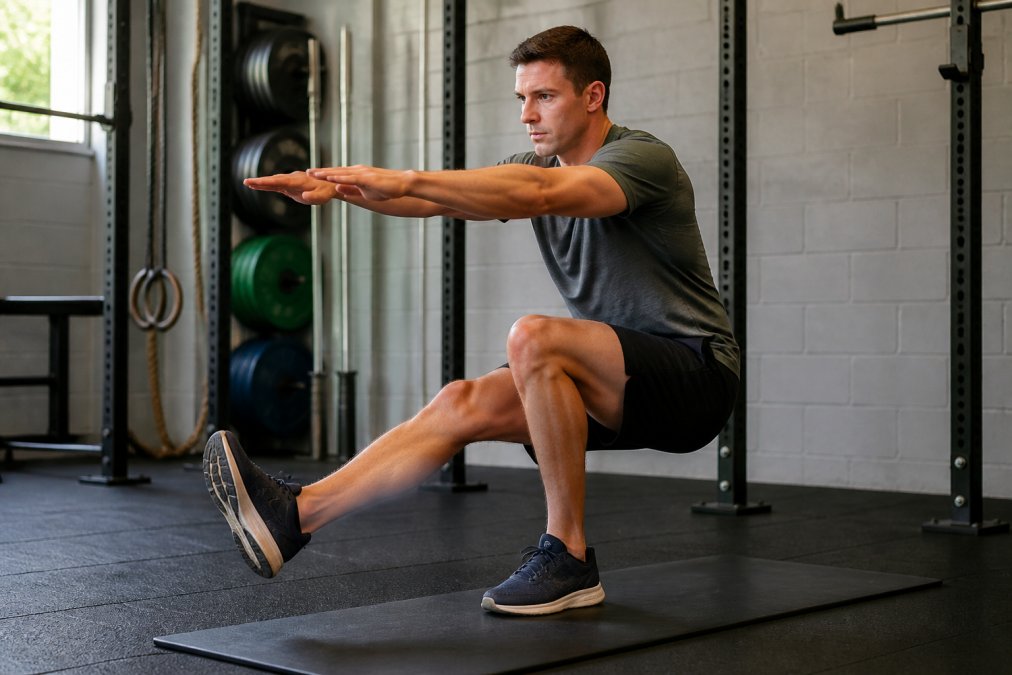
The focus should be on stability, load transfer, and the ability to maintain proper mechanics under fatigue, single-leg work, hip-dominant exercises, and movements that replicate running demands.
Hip Abductors, External Rotators, and Functional Movement
The hip abductors and external rotators are the most critical muscle groups for injury prevention in distance runners, and they are chronically undertrained. Weakness in these muscles leads to hip drop during the stance phase of gait, increasing stress on the IT band, patellofemoral joint, and medial structures of the knee. It also contributes to excessive internal rotation of the femur, a primary driver of runner’s knee and stress fractures.
Effective exercises include single-leg deadlifts, clamshells and lateral band walks, step-ups with hip extension, Copenhagen adductor planks, and glute bridges with single-leg variations. Two to three sessions per week, 20 to 30 minutes each, is sufficient to produce meaningful adaptation without compromising running volume.
Balance, Proprioception, and Running Cadence
Proprioception, the body’s ability to sense its own position in space, is critical for injury prevention. Runners with poor proprioceptive function are more susceptible to ankle sprains, hip instability, and compensatory movement patterns. Balance training, including single-leg stance work on unstable surfaces, directly improves proprioceptive function.
Running cadence also matters. A cadence below 160 steps per minute is associated with greater vertical oscillation and higher impact forces per stride. Increasing cadence by even a small margin can meaningfully reduce load on the knees and hips.
Mileage Progression, Warm-Ups, and Load Management
Load management is where most training plans either succeed or fail. The body adapts to stress, but only when that stress is applied progressively and recovery is built in as non-negotiable.
The 10% Rule and Periodization in Your Training Block
The 10% rule states that weekly mileage should not increase by more than 10% from one week to the next. This reflects a sound principle: tissue adaptation is slower than cardiovascular adaptation. Your lungs will feel ready before your tendons are.
Periodization, the structured variation of training load and intensity across a training block, is the more sophisticated application of the same principle. A well-designed marathon training block includes build weeks, cutback weeks, and a taper, all calibrated to allow tissue repair between loading phases. According to guidance from the American Running Association on training load, structured periodization significantly reduces the incidence of overuse injuries compared to linear mileage progression.
Skipping cutback weeks because you feel good is one of the most common training errors in marathon preparation. Fatigue accumulates silently. By the time symptoms appear, the damage is already done.
Dynamic Stretching Before Runs and Static Stretching After
Dynamic stretching, which involves controlled movement through a range of motion, is appropriate before runs because it increases tissue temperature and prepares the neuromuscular system for load. Leg swings, hip circles, walking lunges, and high knees are effective pre-run options.
Static stretching, which involves holding a lengthened position for 20 to 60 seconds, is more appropriate after runs when tissue is warm and pliable. A 5 to 10 minute easy walk or slow jog followed by static stretching of the hip flexors, hamstrings, calves, and IT band supports tissue recovery and reduces next-day stiffness.
Importance of Rest Days in Marathon Training and Recovery Science
Rest days are not passive. They are when adaptation actually occurs. During training, you create micro-damage in muscle and connective tissue. The repair process, which produces stronger, more resilient tissue, happens during rest. Skipping rest days does not make you fitter faster. It interrupts the repair cycle and increases cumulative tissue stress, the direct pathway to overuse injuries.
Athletes who include adequate rest and recovery days in their training blocks sustain fewer injuries and perform better at peak events.
Sleep Hygiene for Tissue Repair and Overtraining Syndrome Prevention
Sleep is the most underutilized recovery tool in endurance sport. During deep sleep, the body releases growth hormone, which drives tissue repair and protein synthesis. Chronic sleep deprivation impairs tissue repair, elevates cortisol, and increases the risk of overtraining syndrome.
According to National Sleep Foundation guidelines on sleep and athletic recovery, athletes benefit from seven to nine hours of sleep per night, with some research supporting even higher volumes during heavy training blocks.
Practical sleep hygiene includes consistent sleep and wake times, a cool dark sleeping environment, limiting screen exposure in the 60 minutes before bed, and avoiding high-intensity training within three hours of sleep.
Overtraining syndrome is a clinical condition characterized by persistent fatigue, declining performance, mood disturbance, and increased injury susceptibility. It develops when training load consistently exceeds recovery capacity over weeks or months. A resting heart rate elevated by more than five to seven beats above your baseline warrants a reduction in training load.
Sports Massage for Injury Prevention: What the Evidence Shows
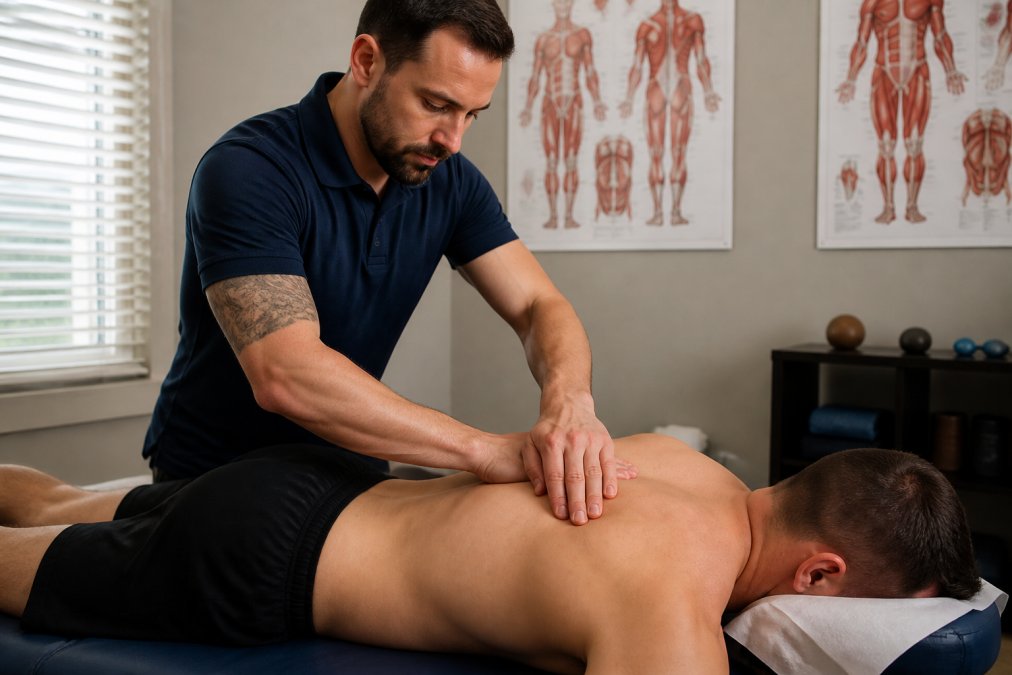
Sports massage for injury prevention works through several mechanisms: it reduces muscle tension, improves local circulation, promotes tissue mobility, and helps identify areas of restriction or dysfunction before they become symptomatic injuries.
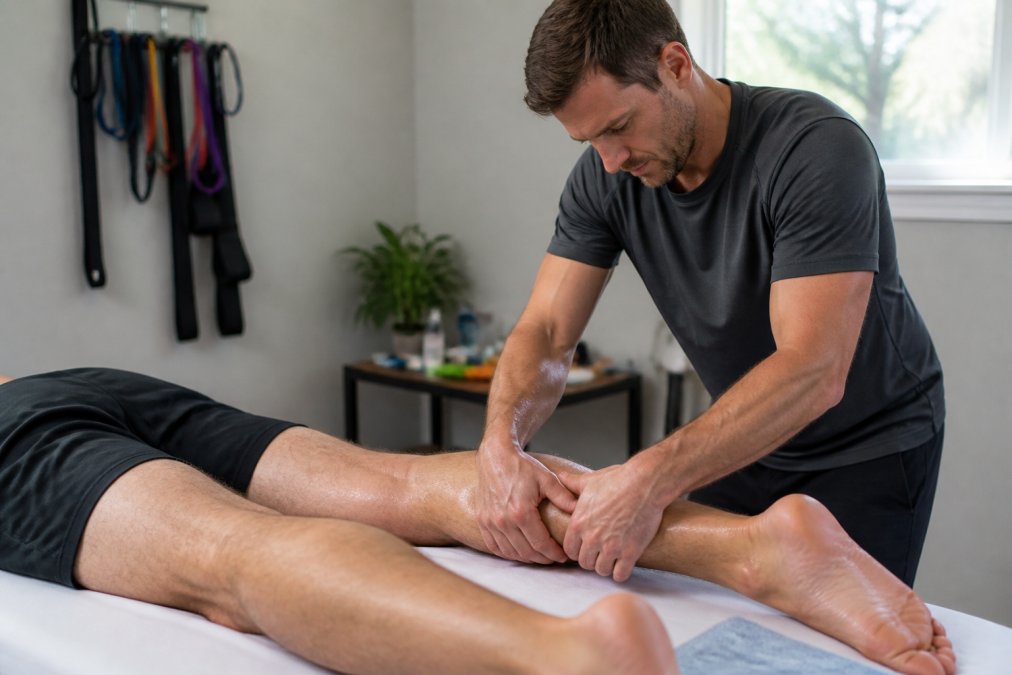
The evidence base for sports massage is strongest in perceived recovery, delayed onset muscle soreness reduction, and range of motion improvement. For marathon runners, a skilled therapist can detect tissue restrictions, trigger points, and movement compensations that the runner often cannot feel until they become painful.
Frank A. Casucci III LMT has worked with athletes at the Yale Track Team, US Open Tennis Championships, and professional dance companies including the Paul Taylor Dance Company and the Joffrey Ballet. That clinical breadth matters because tissue patterns in a marathon runner are specific. Calf tightness that does not respond to stretching often has a proximal cause at the hip or lumbar spine. Orthopedic Massage techniques address the root driver, not just the symptomatic site.
Regular massage during a training block, typically every two to four weeks depending on training volume, supports tissue quality and helps prevent the gradual accumulation of restriction that leads to injury.
| Massage Frequency | Training Phase | Primary Benefit |
|---|---|---|
| Every 2 weeks | Peak training block | Tissue quality, early restriction detection |
| Every 3-4 weeks | Base building phase | Maintenance, movement assessment |
| 1-2 days before race | Pre-race | Light flush, nervous system regulation |
| 48-72 hours after race | Post-race recovery | Metabolic waste clearance, tissue repair |
Request a movement assessment during your first session, not just soft tissue work. Identifying a hip restriction or gait asymmetry before it becomes symptomatic is worth more than any amount of reactive treatment.
Footwear, Biomechanical Assessment, and the Mental Side of Staying Healthy
Footwear selection is not about brand loyalty or cushioning preference. It is about matching shoe geometry to your individual biomechanics. A runner with significant pronation in a neutral shoe loads the medial structures of the knee and foot with every stride. A runner with a rigid, high-arched foot in a motion-control shoe restricts the natural shock absorption the foot is designed to provide.
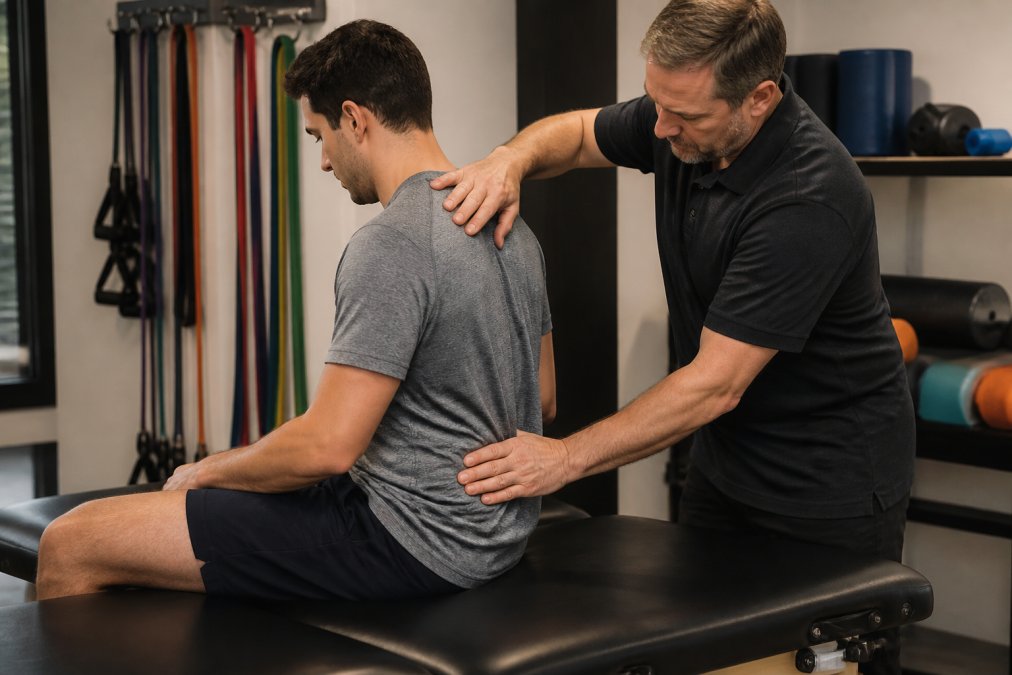
Gait analysis, conducted by a qualified professional, provides the objective data needed to make a sound footwear decision. It identifies cadence, foot strike pattern, vertical oscillation, and hip mechanics under load, information directly relevant to injury prevention because biomechanical inefficiencies become clear under video analysis.
The mental side of injury prevention is often overlooked. Runners who are psychologically invested in hitting specific mileage targets, or who tie their identity tightly to their training, are statistically more likely to ignore early warning signs and push through pain. Building in decision rules before training begins helps. For example: “If I have pain above a three out of ten during the first mile, I stop and reassess.” Pre-committing to these rules removes the in-the-moment negotiation that leads to bad decisions under competitive pressure.
Post-Injury Return-to-Run Protocols for Injury Prevention for Marathon Runners
Returning to running after injury is where the second injury most often happens. The tissue has healed sufficiently to feel normal, but the underlying load capacity has not yet returned to pre-injury levels. Rushing this phase is the most common cause of re-injury.
A structured return-to-run protocol follows a graduated approach: pain-free walking at normal pace, walk-run intervals beginning with 1-minute run and 4-minute walk repeated 5 times, progressive run extension increasing by 1 minute every 2-3 sessions, easy continuous running of 20 minutes at conversational pace, and finally pace and volume progression reintroducing tempo and long runs only after 2 weeks of pain-free easy running.
The 10% rule applies here as well, but the starting point is much lower. A runner returning from a tibial stress fracture should not pick up where they left off. They should treat their return as a fresh base-building phase.
Kinesio Taping, used at Frank A. Casucci III LMT, can support the return-to-run phase by providing proprioceptive feedback and mild structural support to healing tissues without restricting full range of motion. Cross-training during recovery, pool running, cycling, and elliptical training, maintains cardiovascular fitness and allows continued training stimulus without impact forces that could compromise healing tissue.
Staying healthy through marathon training requires more than good intentions. Frank A. Casucci III LMT brings over two decades of experience in sports medicine and rehabilitation to help runners identify and correct the movement patterns, tissue restrictions, and biomechanical imbalances that lead to injury. Through customized sessions using Orthopedic Massage, Kinesio Taping, and targeted assessment, the goal is faster recovery, better performance, and fewer setbacks between now and your next start line. Schedule now to build the foundation your training depends on.
Frequently Asked Questions
What is the 10% rule for marathon training mileage?
The 10% rule recommends increasing your weekly mileage by no more than 10% from one week to the next. This pacing helps your connective tissue, tendons, and bones adapt to rising impact forces without tipping into overuse injuries like stress fractures or tendinopathy. It applies to total weekly volume, not just long run distance.
How can a beginner runner avoid common overuse injuries?
Start with three to four runs per week, keep most of them at an easy conversational pace, and build mileage gradually using the 10% rule. Prioritize hip abductor and external rotator strengthening from the first week of training, since muscle imbalances in those areas drive a large share of knee and IT band problems. Add dynamic stretching before each run and static stretching after. Schedule at least two full rest or cross-training days per week to allow tissue repair.
What role does professional massage therapy play in marathon recovery?
Sports massage targets muscle imbalances, adhesions, and restricted tissue that accumulate during high-mileage training. Techniques like orthopedic massage and Kinesio Taping address specific biomechanical dysfunctions rather than general tension. Regular sessions during a training block can reduce recovery time between hard efforts, improve range of motion, and help identify developing problems before they become injuries. For marathon runners, it works best as part of a broader plan that includes strength work and load management.
How do you identify the early warning signs of a running injury?
The clearest signals are pain that persists beyond the first mile of a run, discomfort that changes your gait or stride, localized tenderness on a bone or tendon, and swelling or stiffness that does not resolve within 48 hours of a hard effort. Pain that rates above a 3 out of 10 during a run, or any sharp pain, warrants stopping and consulting a qualified professional. Catching these signs early typically means a shorter recovery window and a faster return to full training.
What are the most effective strength training exercises for marathoners?
Single-leg squats, lateral band walks, hip bridges, and clamshells directly target the hip abductors and external rotators that stabilize the pelvis during each stride. Calf raises and single-leg deadlifts build lower-leg resilience against Achilles tendinopathy. Core exercises like dead bugs and pallof presses reduce lateral trunk sway, which lowers impact forces at the knee. Two sessions per week of 20 to 30 minutes, focused on functional strength rather than heavy lifting, is sufficient for most marathon runners.
How long should you taper before a marathon to prevent injury?
Most marathon plans include a two- to three-week taper, during which weekly mileage drops by roughly 20 to 40 percent each week while intensity stays moderate. This period allows accumulated tissue fatigue to resolve without losing fitness. Cutting mileage too aggressively or too late both carry risks: too early can leave you undertrained, while skipping the taper increases the chance of arriving at the start line with unresolved inflammation or overtraining syndrome symptoms.